Russian Drug Markets on Darknet 2026: Hydra Successors and Slavic DNM Landscape
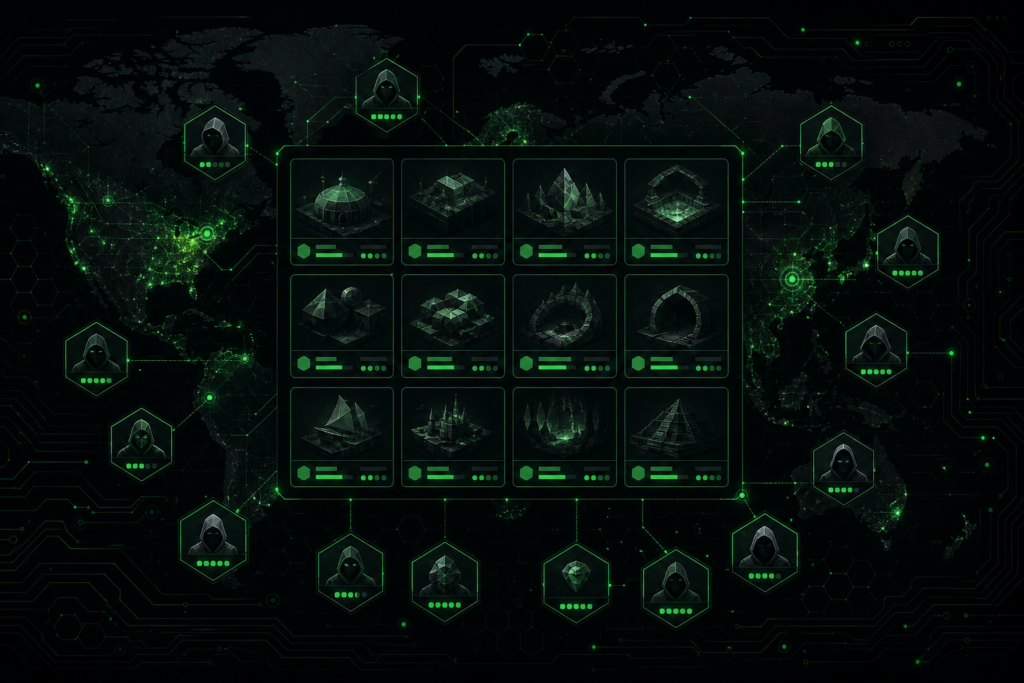
After the Fall of Hydra: The Fractured Landscape of Russian Darknet Markets in 2026
The closure of Hydra in April 2022 was never going to be a terminal event for Russian-language drug markets. What followed-a chaotic, violent scramble for dominance among a dozen competing platforms-has instead produced a landscape more fragmented and harder to police than the Hydra monopoly ever was. For researchers and privacy-conscious analysts tracking this space, the question isn’t whether the Slavic darknet market ecosystem survived, but how its successor platforms evolved, and what risks they now pose to users in 2026.
The Hydra Effect: Proliferation as a Survival Strategy
When German law enforcement seized Hydra’s servers in April 2022, the conventional wisdom held that a single takedown had dealt a decisive blow to Russian darknet commerce. The data tells a different story. According to TRM Labs, in the five months following Hydra’s closure, twelve Russian-language marketplaces collectively amassed approximately 24% more transaction volume than Hydra had generated in the first five months of that same year when it was still operational. The hydra-lowercase-wasn’t killed. It multiplied.
This pattern, now referred to in analyst circles as the “Hydra effect,” has since been observed in other market takedowns. After Genesis Market was disrupted, forums saw a surge in mentions of Russian Market, along with a proliferation of dedicated Telegram channels offering similar services. Yet as TRM noted, this chatter has not consistently translated into measurable on-chain sales volume increases-suggesting that the ecosystem’s center of gravity is shifting in ways that raw transaction data alone cannot capture.
The Post-Hydra Wars: Cyber Attacks as Marketing
The immediate aftermath of Hydra’s collapse was not a peaceful redistribution of market share, but an open conflict. What Wikipedia now documents as the “Russian darknet market conflict” saw platforms like Kraken, Solaris, and RuTor trading cyber attacks and launching aggressive advertising campaigns that spilled onto the streets of Moscow, including a bus plastered with Kraken’s logo and QR code that blocked traffic on the Arbat for hours in December 2022.
This period established a pattern that persists in 2026: market admins view DDoS attacks and site defacements not merely as offensive tactics, but as brand-building exercises. When RuTor was temporarily knocked offline after warning users to withdraw cryptocurrency from a competitor’s forum, it responded by hacking WayAway and publishing screenshots-framing the attack as evidence of WayAway’s weak security. In this ecosystem, a successful hack is a marketing campaign.
More troubling was the involvement of the Russian hacker group Killnet, which Solaris hired in October 2022 to attack Kraken, RuTor, Mega, and BlackSprut. Killnet later used funds stolen from drug shops to finance the Russian military in Ukraine-a reminder that the financial plumbing of these markets is never apolitical.
Garantex: The Financial Backbone That Won’t Die
No entity has been more central to the post-Hydra Russian darknet economy than Garantex. Before Hydra’s takedown, Garantex was one of its primary financial enablers, facilitating tens of millions in transaction volume. After Hydra fell, the largest successor markets maintained millions in exposure to the exchange. By 2024, Garantex and Nobitex together accounted for over 85% of crypto inflows to sanctioned entities and jurisdictions.
Garantex’s role extends beyond market transactions. In 2023, Russian-speaking ransomware groups accounted for at least 69% of all crypto proceeds from ransomware-exceeding USD 500 million-and Garantex played a key role in laundering those proceeds, processing funds linked to Ryuk, Conti, and LockBit. The Ryuk group alone laundered over USD 2.3 million through the exchange. Garantex also enabled sanctioned Russian money launderers like Ekaterina Zhdanova, who moved funds linked to elites and ransomware operators, and facilitated payments to companies supplying components for weapons used in Russia’s invasion of Ukraine.
The 2025 sanctions on Bitpapa and NetEx24-both of which facilitated millions in transactions for OFAC-designated entities including Hydra Market and Garantex-demonstrate that law enforcement is attempting to cut off the financial arteries. But the pattern is clear: whenever one exchange is sanctioned, another emerges to fill the gap. The Garantex network is not a single point of failure; it is a distributed infrastructure that has become integral to the Russian shadow economy.
| Torzon Market |
torzon7aphar3x4l5b77nsylgyw26kntbi4m2wemrjh72aczeh27f6qd.onion
|
| DrugHub |
drughuj7l72ig56pza77eriu7yh6qsao4xb4yasq2qfjusxzuq6rlwqd.onion
|
| DarkMatter |
darkmafmzgnsmow5z3spgludhpwxhwbg77oam433fjx3clzh2yp2oaid.onion
|
| Omega Market |
omega7yhz7n4vg4yhf2na2qaaaeatdlqvjbj2juc245mr5muxtnuvgyd.onion
|
| BlackOps |
blackoogcnxogvymmebfwfjhx4k7efpgeoeytxtsev2lc4pqlbz54qad.onion
|
The 2026 Market Landscape: What’s Left
Four years after Hydra’s fall, the Russian darknet market ecosystem has settled into a pattern of medium-sized platforms that are simultaneously competitors and co-conspirators. Kraken, Solaris, BlackSprut, and Mega have emerged as the primary successors, but none has achieved Hydra’s level of dominance. This fragmentation has important implications for users.
On the positive side, smaller markets are harder for law enforcement to prioritize and can adapt faster to security threats. On the negative side, they have less incentive to maintain escrow integrity or responsive support systems. The community-enforced governance that Dread provides-where market administrators maintain PGP-verified accounts and respond to user complaints publicly-is even more critical in this fragmented environment. Markets that ignore criticism on Dread lose users; those that engage constructively build trust. In 2026, ignoring the forum ecosystem is a fast track to irrelevance or worse.
OPSEC Considerations for the Slavic Darknet in 2026
For anyone operating in this space-whether as a researcher or a privacy-conscious participant-the post-Hydra era demands more sophisticated operational security than the Hydra monopoly required. Several factors deserve attention:
Exit scams are more likely. The competitive pressure among mid-tier markets creates incentives for admins to cash out quickly. The first warnings of an impending exit scam almost always surface on Dread days or weeks before the platform goes dark. Monitoring subdreads like d/DarkNetMarkets is not optional.
Payment processor risk is elevated. The reliance on third-party payment processors-which typically charge around 5% of transacted funds-remains a critical vulnerability. When a processor is compromised or seized, every market using it becomes exposed. After Genesis Market’s takedown, on-chain analysis revealed that its entire operations depended on a single payment processor’s architecture. This is a single point of failure that multiple Russian markets still share.
Telegram is a double-edged sword. The proliferation of Telegram channels for market announcements and vendor communication has created new attack surfaces. Law enforcement monitors these channels actively, and phishing attacks via Telegram are endemic. The rise of dedicated Telegram-based sales channels-observed after Genesis Market’s disruption-suggests a partial migration toward less secure communication platforms.
Monero is now table stakes. In 2026, any Russian market still accepting Bitcoin for drug transactions is either incompetent or actively targeting inexperienced users. The Monero requirement is no longer a mark of sophistication; it is the minimum viable privacy standard.
The Forum Intelligence Gap
The single most common mistake darknet participants make-even experienced ones-is treating markets as isolated platforms. Darknet markets are transactional platforms, not information environments. Forums like Dread are where the ecosystem’s collective intelligence lives. If a market is preparing an exit scam, the first warnings will appear there. If a vendor is selectively scamming high-value orders, the pattern analysis will be crowdsourced there. If law enforcement has seized a market and is running it as a honeypot, the forensic analysis will be community-driven there.
Dread’s architecture-subdreads, karma systems, PGP signature verification, and canary-signed announcements-creates a form of community-enforced governance that is genuinely impressive for an adversarial environment operated entirely through Tor. For researchers, the publicly accessible content (no account required for reading) provides a continuous stream of intelligence that no single market can control or censor.
The Long View: What 2026 Tells Us
The Russian darknet drug market in 2026 is neither a law enforcement success story nor a criminal utopia. It is a constantly adapting ecosystem that has internalized the lessons of Hydra’s fall: centralization is vulnerability, fragmentation is resilience, and the financial infrastructure will always adapt faster than sanctions regimes can block it.
The Hydra effect is not finished. Every significant market disruption-whether of a marketplace, an exchange, or a payment processor-will generate new platforms and new channels. The challenge for researchers and users alike is to maintain the same adaptive capacity: monitor the forums, verify the canaries, distrust the hype, and never assume that a single takedown has solved the problem.
This analysis is provided for research and educational purposes only. No links to live markets or direct access instructions are included.